
Karen Scott Cable-Knit vs V-Neck Sweater: Which Fits Your Style?
Choosing between a cable-knit and a V-neck sweater comes down to how you dress every day and what you need your wardrobe to do. Both styles anchor our collection because they solve different problems — the cable-knit brings texture and warmth for casual weekends, while the V-neck offers a clean line that works under blazers or on its own.
This Karen Scott sweaters comparison walks through neckline shape, fabric weight, layering flexibility, and styling range so you can decide which one belongs in your closet first. We’ll cover when each style shines and how to get the most versatility from either choice.
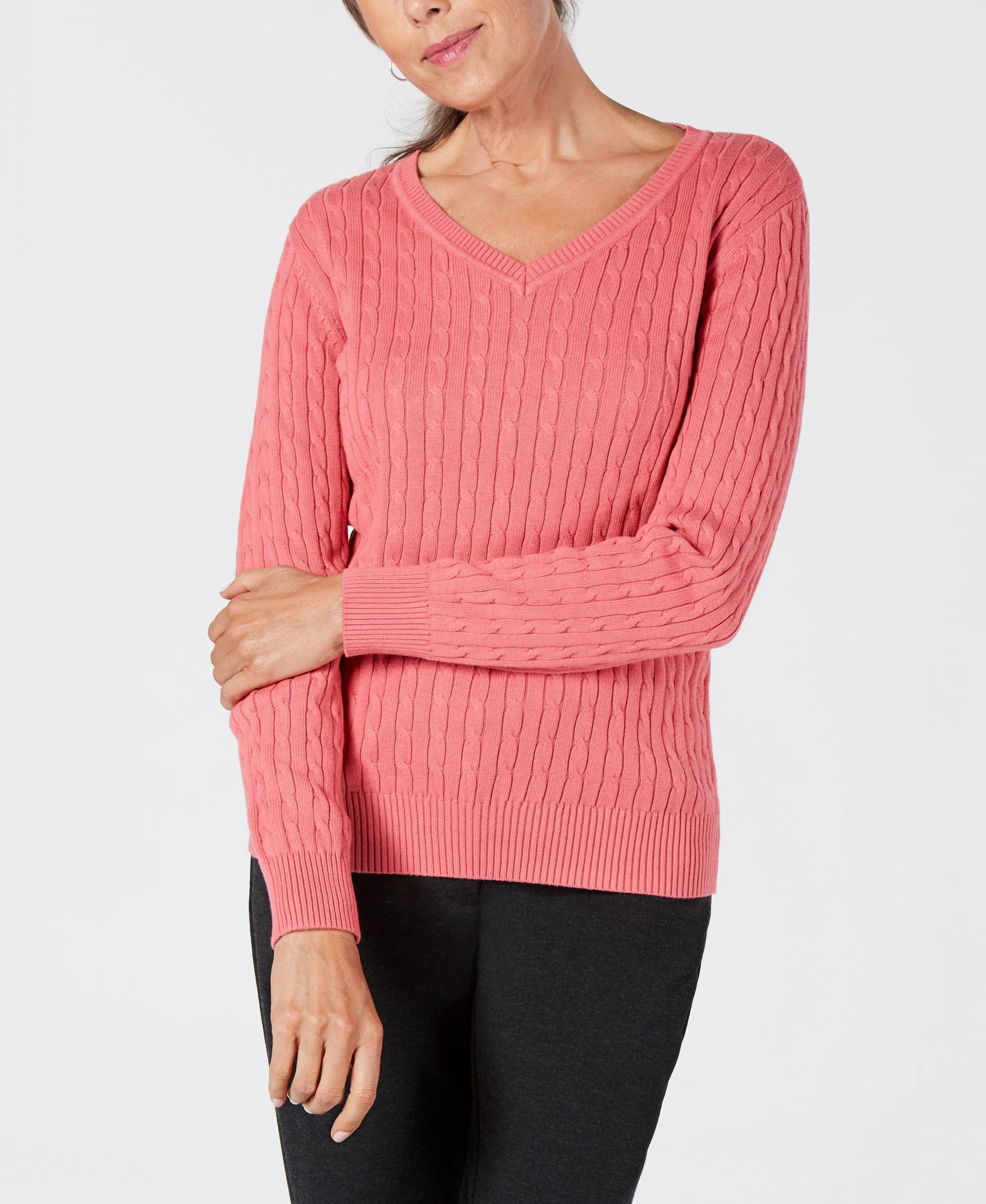
Neckline Shape and How It Changes Your Silhouette
The V-neck creates a vertical line that visually lengthens your torso and draws the eye downward, making it a go-to for layering over collared shirts or pairing with statement necklaces. The cable-knit crew neck sits higher on the chest and frames your face with a rounded opening, which adds softness and works best when worn alone or over a simple tee.
If you wear business-casual separates often, the V-neck integrates more easily into outfits that include tailored trousers and polished separates because the neckline doesn’t compete with structured pieces. The cable-knit crew neck reads as more relaxed and pairs naturally with jeans, leggings, or casual skirts when you’re building weekend looks that prioritize comfort over formality.
Fabric Texture and Weight Differences
Cable-knit construction uses a raised, twisted-stitch pattern that adds physical dimension to the fabric, resulting in a heavier, chunkier knit that traps more air and delivers extra warmth. This texture makes the sweater visually interesting on its own, so you don’t need accessories to complete the look.
Our cable-knit sweater uses a mid-weight cotton blend that holds its shape through repeated washes without stretching out at the cuffs or hem. The V-neck typically features a finer gauge knit with a smooth, flat surface that drapes closer to the body and layers more easily under jackets without adding bulk. This smoother texture works well when you need a polished silhouette but still want the warmth of knitwear.
Layering Versatility and Seasonal Use
How Each Style Works with Outerwear
The V-neck’s streamlined profile slides under blazers, cardigans, and coats without bunching at the shoulders or neckline, making it the better choice for office environments where you add and remove layers throughout the day. The cable-knit’s thicker gauge and higher neckline mean it works best as the outer layer or under open-front cardigans that don’t compress the textured knit.
For colder months, the cable-knit delivers more insulation on its own, while the V-neck pairs well with our cardigan sweaters or a turtleneck layered underneath when temperatures drop. The evolution of sweater knitting techniques over centuries has produced distinct patterns and gauges optimized for different climates and uses, which explains why cable-knit and smooth-knit styles persist as separate wardrobe categories.

Styling Range and Occasion Flexibility
The V-neck adapts to more dress codes because its simple neckline and smooth surface read as neutral — you can dress it up with slacks and loafers or dress it down with denim and sneakers without the sweater itself signaling a specific formality level. Our V-neck tops in different sleeve lengths extend this versatility across three seasons.
The cable-knit makes a stronger style statement due to its texture and visual weight, so it anchors casual looks more naturally than formal ones. If your calendar includes both client meetings and weekend errands, the V-neck covers more scenarios with one piece, while the cable-knit excels when you want a cozy, textured layer that stands out in relaxed settings.
Choosing the Sweater That Matches How You Dress
The cable-knit delivers warmth, texture, and a distinct casual presence that works best when you build outfits around comfort and visual interest. The V-neck offers a cleaner line, easier layering, and the flexibility to move between dress codes without changing your entire look.
Neither choice is objectively better — the right sweater depends on whether your daily routine demands polished versatility or relaxed, textured style. Start with the one that solves your most frequent styling challenge, and you’ll reach for it consistently instead of letting it sit unworn in your closet.
Common Questions About Cable-Knit and V-Neck Sweaters
The V-neck fits business-casual dress codes more easily because its smooth knit and open neckline layer cleanly under blazers and pair well with trousers or pencil skirts. The cable-knit reads as more casual due to its chunky texture, so it works best on dress-down Fridays or in creative office environments that allow relaxed knitwear.
Yes, the cable-knit’s thicker gauge and raised stitch pattern trap more air between the fibers, delivering better insulation when worn on its own. The V-neck’s finer knit offers less warmth solo but layers more easily under coats and cardigans, so total warmth depends on how you build the outfit.
The V-neck frames necklaces naturally because the open neckline creates space for pendants or chains to sit visibly against your skin or a layered shirt. The cable-knit’s crew neck sits higher and works better with earrings or scarves, since necklaces tend to get lost against the textured fabric.
Both styles machine-wash on a gentle cycle and lay flat to dry, but the cable-knit’s raised texture can snag more easily on rough surfaces or jewelry. The V-neck’s smooth knit resists pilling and snags better over time, making it slightly lower-maintenance if you wear it frequently under structured outerwear.
Choose the V-neck if you need one sweater to cover both work and casual settings, since its neutral neckline and smooth fabric adapt to more dress codes. Pick the cable-knit if your wardrobe leans casual and you want a textured layer that stands out in relaxed outfits without needing accessories.